


TL;DR: A boarding school is a school where children live on campus as well as study there, so the school provides lodging, meals and round-the-clock care alongside lessons. Boarders live in houses run by staff who act in place of parents, and they follow a fixed day of classes, sport, meals, supervised evening study and lights-out. A 2024 meta-analysis of 49 studies in Frontiers in Psychology[1] found no significant overall effect of boarding on student development, with a positive effect on cognitive development and a negative effect on affective and attitudinal development. Boarding suits a child who wants to go, can manage some independence and joins a school whose pastoral care fits that child's needs. Before choosing a boarding school, visit the campus, ask current boarders how they coped with homesickness and read the school's rules on contact with home.
A boarding school is a school where children live as well as learn
- Boarding school
- a school where pupils live on the premises while receiving formal instruction, with "boarding" meaning lodging and meals, as Wikipedia's entry on boarding schools defines it.
The term usually refers to residential schools for school-age children rather than universities. Some boarding schools are the most privileged educational option in their country, while in other contexts residential schools have served to separate children whom parents or society regarded as a problem.
India is commonly listed among the countries where boarding schools are relatively more prevalent, and where boarding starts earlier and lasts longer. No published figure in the evidence we reviewed gives the number of boarding schools or boarders in India, so treat any confident national statistic with caution.
Boarders differ by how often they go home
Wikipedia groups boarders into four types by how often they go home, and some schools now add five-day, weekly or flexible boarding to suit families, according to Boarding School Review[2].
| Type of boarder | When the child goes home |
|---|---|
| Full-term boarder | At the end of the academic year |
| Term boarder | At the end of each academic term |
| Weekly boarder | At weekends |
| Five-day or flexible boarder | On a pattern the school and family agree |
| Semi-boarder | Every evening, after lessons and activities |
Some boarding schools also enrol day pupils who go home each evening. Each school's own policy sets the pattern, so ask before you shortlist.
How does a typical boarding school day run?
A boarding school day runs to a fixed timetable that covers lessons, sport, meals, supervised study and sleep. Life outside the classroom centres on the house. In the traditional house system, senior staff serve as housemasters, housemistresses or dorm parents and take quasi-parental responsibility for the students in their house, which Wikipedia puts at anywhere from 5 to 80 students[3]. Each house usually combines sleeping quarters, a dining room with fixed meal times and space for homework.
- In loco parentis
- the principle under which house staff act in place of a parent, taking responsibility for a boarder's daily care, particularly outside school hours.
Timings vary by school and by country, and none of the published sample timetables we found describes an Indian school. As one illustration, Darrow School in the United States[4] describes a typical day like this:
| Time | Activity at Darrow School, USA |
|---|---|
| 7:00 a.m. | Wake-up and morning preparation |
| 8:00 a.m. | Communal breakfast |
| 9:00 a.m. to 4:00 p.m. | Classes and activities |
| 4:00 to 5:30 p.m. | Personal time or sports |
| 6:30 to 9:45 p.m. | Supervised study hours |
| 10:00 p.m. | Evening activities and preparation |
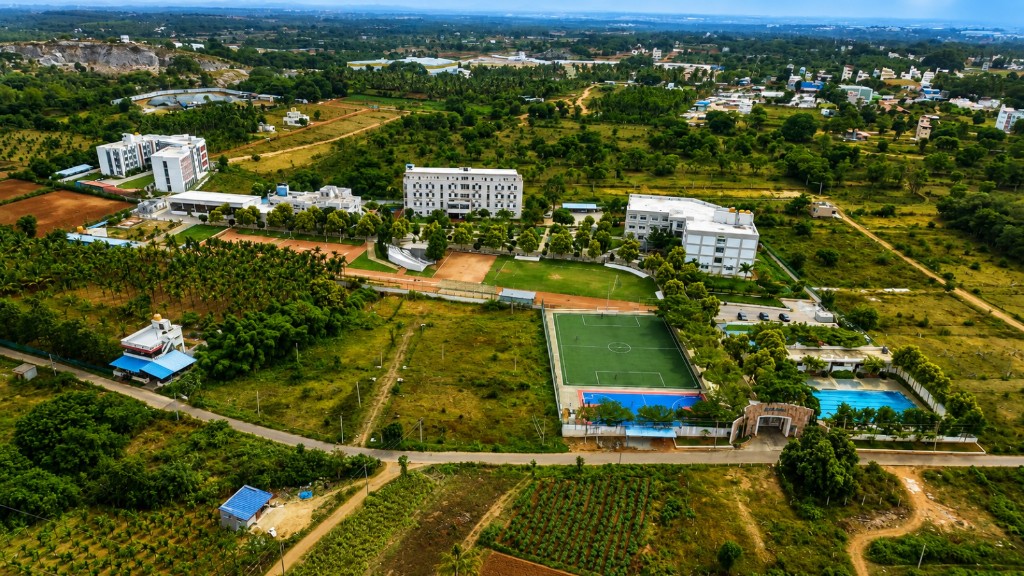
Lights-out follows a set time by age group, often between 9:30 p.m. and 11:00 p.m. in the US and UK examples that Boarding School Review[5] describes. Supervision often loosens for older students, with prefects given limited authority. At The Academic City School, every student plays sport for 90 minutes a day, with coaching in football, basketball, swimming, cricket, badminton and more.
House staff, doctors and counsellors share the care of a boarder
Care in a boarding school comes from a team rather than one adult. At US schools such as Interlochen Arts Academy, residence hall staff, dorm parents, guidance counsellors, school nurses and mental health counsellors supervise students 24 hours a day[6]. Staffing differs by school and by country, so ask each school who is on duty at night and whom a child goes to when unwell or upset.
Pastoral care is the part of school life that looks after a child's wellbeing, feelings and behaviour, separate from academic teaching. The Academic City School runs separate AC hostels with pastoral care, a 24-hour doctor on call and home-like celebrations, shaped by Indic values and structured living.
Contact with home has changed
Boarding no longer means cutting a child off from family. An Australian boarding psychologist interviewed by Linda Stade[7] says the old practice of cutting off contact so a child could "harden up" has gone, replaced by an emphasis on family involvement. Many boarders keep daily or weekly contact with family, though policies vary by school. A phone call still cannot replace being there in person.
Parents of a boarder also see less of daily life, and one Quora respondent warns that parents are less likely to know if a boarding child is being bullied. Some boarding schools carry documented legacies of abuse, and many have since strengthened safeguarding policies, reporting mechanisms and residential oversight, according to Boarding School Review[8]. Ask every school how a child reports a worry, who hears it, and how quickly the school tells parents.
What does research say a child gains from boarding?
The research gives a mixed answer, and none of the evidence we reviewed is specific to India. A peer-reviewed meta-analysis is the strongest single source.
A 2024 meta-analysis of 49 experimental or quasi-experimental studies (91 effect sizes) by Zhong, Feng and Xu, published in , found no significant overall effect of boarding on student development, with a combined effect size of 0.002.
An effect size is a standard measure of how large a difference is, and a value near zero means boarding made almost no measurable difference overall. Beneath that result, the same analysis found a modest positive effect on cognitive development (g = 0.248) and a small but significant negative effect on affective and attitudinal development (g = -0.159). It detected no significant effect on behavioural or physical development. Negative effects were more significant for junior middle school students and for rural boarders.
The research team is based in China, the paper names no Indian studies in the text we reviewed, and the authors say their findings depend on the quality of the underlying studies and need longitudinal validation. On the pooled evidence, boarding brings a small gain in cognitive development and a small cost in affective and attitudinal development, with no significant effect overall.
Schools and practitioners describe the gains in their own terms
Jane Carmignani, a psychologist at an Australian girls' school who researched first-year boarders, says boarders get extra peer and staff interaction[9] plus tutoring, routine and structure, and that research shows boarders become more academically successful after an initial struggle. Treat that as one practitioner's view: we could not verify the study behind it. Self-selection bias is the distortion that arises when the children who choose boarding already differ from those who do not, so their results reflect who they were as much as what boarding did.
At The Academic City School, the Life Readiness Programme teaches first aid, cooking, financial literacy and public speaking, and students explore more than 600 career options through industry interactions, psychometric assessments and expert mentoring. The school reports a 1:10 student-teacher ratio on its Bangalore campus, which follows the CBSE curriculum for Grades 5 to 10, and builds a Student Progression Plan for each child from Grade 5. For a fuller account, read our expert's view on how boarding schools benefit children. Choose boarding for the daily structure, the care and the opportunities a specific school offers, never for a promised result.
Expect the first term to be the hardest part of boarding
Homesickness is a normal part of starting boarding, and it is usually strongest in the first months. Families commonly report homesickness, especially in the first year, along with the emotional adjustment of living away from home, high costs and reduced flexibility compared with day school, according to a Think Academy US review of parent discussions[10]. Boarding School Review adds independent living skills and peer dynamics to that list, and even boarding advocates concede homesickness and a lack of privacy.
Not every child settles. One former boarder writing on Quora describes her school as a very oppressive environment while acknowledging that others, including her sister, enjoyed and excelled there. Her account is one person's experience, yet it makes the right point: the match between a child and a particular school decides how boarding feels.
Prepare your child for the first term in five steps:
Talk about boarding early and honestly. Tell your child why the family is considering boarding, and listen to their worries before you reassure them. Give your child a real voice in the final decision.
Practise the daily skills at home. As Holderness School[11] in the US puts it, living away from home calls for managing time, washing clothes and staying organised. Before the first day, let your child pack their own bag and keep track of their own belongings.
Agree a contact routine with the school. Learn the school's rules on calls, visits and weekends before the first day. A predictable call at a fixed time gives a homesick child something steady to look forward to.
Visit together and meet the house staff. Let your child see the dormitory and the dining hall before joining. Ask current boarders how often they see family and how they coped with homesickness.
Give the first term time. Tears on an early call are part of adjusting, not proof that boarding has failed. Keep your agreed contact and agree with the house staff when to review how your child is settling.
Which children and families does boarding suit?
Boarding is highly fit-dependent rather than a universal solution, and families who have been through it often say it works best when the child is motivated and willing, not placed there as a corrective measure. Even IMG Academy, a US boarding school, states[12] that boarding may not be the right choice for everyone. The practical test is whether your child is emotionally ready to live independently without daily parental support. Use this table to start that conversation at home.
| What to look at | Points towards boarding | Suggests waiting |
|---|---|---|
| Your child's own view | Asks questions and wants to try it | Refuses, or sees the move as a punishment |
| Daily independence | Manages routine and belongings with light reminders | Needs an adult for most daily tasks |
| Reason for boarding | Structure, sport, wider opportunities or distance from home | Only to correct behaviour |
| Response to change | Settles within days after a camp or a move | Stays distressed for weeks after small changes |
| The family's readiness | Parents can keep agreed contact and trust the house staff | Parents expect daily updates on everything |
No source we reviewed sets a recommended starting age, and the pooled research above found negative effects more significant in the junior middle school years. Let readiness, not the calendar, decide, and read our guide on what's the right age to send a child to boarding school. At The Academic City School, families can visit the Nelamangala campus in Bangalore in person or virtually, and each child takes a simple age-appropriate assessment followed by a conversation about their interests, strengths and aspirations.
Frequently asked questions about boarding school
Frequently asked questions
- What is a boarding school in simple words?
- A boarding school is a school where children live on campus during term as well as attend lessons there. The boarding school provides meals, supervised study and round-the-clock care, with house staff acting in place of parents. Boarders go home at weekends, at term breaks or at the end of the year, depending on the school.
- Is boarding school good for my child?
- Boarding school is good for a child who wants to go, is ready for some independence and joins a school whose care fits their needs. A 2024 meta-analysis of 49 studies found no significant overall effect of boarding on student development, so boarding school is neither a guaranteed benefit nor a guaranteed harm for any child.
- How often do boarding school students come home?
- Boarding school students come home on a pattern each school sets. Weekly boarders go home at weekends, term boarders at the end of each term and full-term boarders at the end of the academic year. Some boarding schools also offer five-day or flexible boarding, so confirm the exact calendar before you enrol.
- Will my child get homesick at boarding school?
- Homesickness is common at boarding school, especially in the first term and the first year, and families commonly name it as a main challenge. Regular contact at fixed times and a caring house parent help a child settle. Speak to the house staff if your child's distress lasts several weeks.
- Does boarding school improve academic results?
- No study we reviewed proves that boarding school improves academic results in India. A 2024 meta-analysis found a modest positive effect of boarding on cognitive development and a small negative effect on affective and attitudinal development. Results at any boarding school depend on the teaching, the study routine and the individual child.
- What age should a child start boarding school?
- No research we reviewed sets a single right age to start boarding school. Readiness should decide: a child who manages daily routines, wants to go and copes well with change is better placed to board. The Academic City School admits students from Grade 5, and its guide on the right age explores the decision further.
Sources
- The impact of boarding school on student development in primary and secondary schools: a meta-analysis - PMC Frontiers in Psychology (Zhong, Feng and Xu, School of Education, Minzu University of China) ↩
- Pros & Cons of Boarding School Education in 2025 Boarding School Review ↩
- Boarding school - Wikipedia Wikipedia ↩
- Is Boarding School Bad? Debunking Common Myths and Misconceptions | Darrow School Darrow School (admissions blog) ↩
- A Day in the Life of a Boarding School Student Boarding School Review ↩
- How Do Boarding Schools Work In The United States? A Guide To Boarding School Life Interlochen Center for the Arts (Interlochen Arts Academy) ↩
- What Are The Advantages Of Boarding School? Ask A Psychologist Jane Carmignani, interviewed by Linda Stade ↩
- Pros & Cons of Boarding School Education in 2025 Boarding School Review ↩
- What Are The Advantages Of Boarding School? Ask A Psychologist Jane Carmignani, interviewed by Linda Stade ↩
- Boarding Schools in the U.S.: Costs, Rules, and Fit - Education Briefs | Think Academy US Think Academy US (TAL Education Group) ↩
- Is Boarding School Right for Your Child - 9-12 Private School NH Holderness School ↩
- What Is a Boarding School? Key Benefits Explained | IMG Academy IMG Academy ↩