




Ask any Class 10 student what scares them more, a five mark theory question or drawing the human heart diagram from memory, and most will pick the diagram. Funny thing is, it really shouldn't be that way. Diagrams and experiments are actually the easiest marks on the whole board paper, once you know the pattern examiners look for. We have gone through years of CBSE Class 10 Science papers, practical files, and viva sessions at The Academic City School, and this guide puts everything in one place. No fluff, just what actually helps you score. Think about it this way for a second. A theory answer can be marked down for a missing word, an awkward sentence, or a definition that is technically right but phrased oddly. A diagram does not really have that problem. If the parts are labelled correctly and placed where they should be, the marks are almost guaranteed. That single difference is why we push students to treat diagram practice as daily homework, not a once a week activity squeezed in before a test.
Why Diagrams & Experiments Matter in Class 10 Science
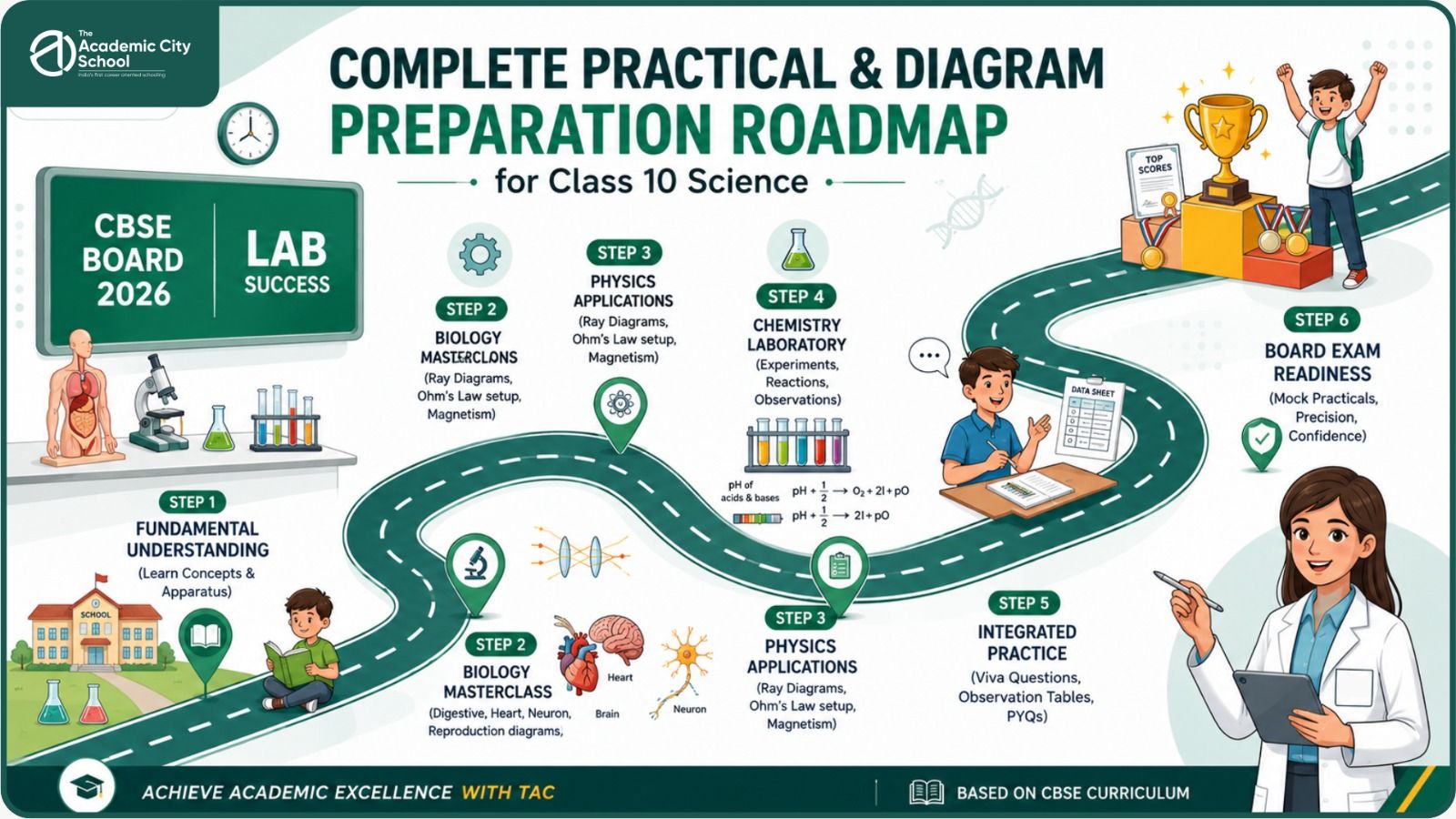 Figure 1: Complete practical and diagram preparation roadmap
Here is a fact that surprises a lot of parents. A well labeled diagram can fetch you close to full marks even if your written explanation is a little shaky. Examiners are trained to check labels, proportion, and neatness first. The explanation comes second. That is exactly why we tell our students, master the diagram first, the words will follow naturally. Strong diagram and practical skills quietly help students in more ways than one:
- Score better in board exams, since diagram questions rarely get partial credit removed for small language mistakes
- Improve practical understanding, which sticks in memory far longer than rote text
- Answer competency based questions confidently, because these questions test whether you actually understand the setup, not just the definition
- Perform well in viva examinations, where a confused answer about a simple diagram costs more than it should
- Build scientific observation skills that carry forward into Class 11 and 12 practicals
- Strengthen conceptual clarity across Biology, Physics and Chemistry at the same time
We have noticed something interesting over the years. Students who practice diagrams regularly tend to answer theory questions faster too, almost like the visual memory of the structure pulls the written explanation along with it. It is not magic; it is just how the brain tends to work when a concept is stored as a picture instead of a paragraph.
Why are diagrams and experiments important in Class 10 Science?
- Diagrams and experiments help students visualise scientific concepts clearly
- They improve conceptual understanding and build laboratory confidence
- Well labelled diagrams and clean experimental procedures directly raise scoring potential in CBSE board papers
Three Real Pillars of Practical Success
Scientific Observation: Catching tiny changes in real time. Is that gas making a popping sound? Did the solution turn a pale green or stay blue? Write down exactly what you see, not what you think the book wants you to say.
Accurate Diagram Drawing: Nobody needs you to be Da Vinci. Just keep things neat, use a sharp pencil, and keep your label lines perfectly horizontal.
- Concept-Based Experimentation: Connecting a messy chemical spill right back to balanced formulas and physical constants.
CBSE Practical Assessment & Diagram Weightage
CBSE assesses Class 10 Science practical skills through internal assessment, and this component matters more than students usually admit. It is not a formality tucked away at the end of the year. It shapes how comfortable you feel with diagrams and lab work when the actual theory paper shows up.
| Internal Assessment Component | Marks |
|---|---|
| Practical Activities | As per the current CBSE scheme for the academic session |
| Portfolio | As per the current CBSE scheme for the academic session |
| Multiple Assessment (periodic tests, subject enrichment) | As per the current CBSE scheme for the academic session |
Please note, CBSE revises exact mark distribution from year to year, so always cross check the latest circular for the 2026-27 session rather than relying on an old scheme.
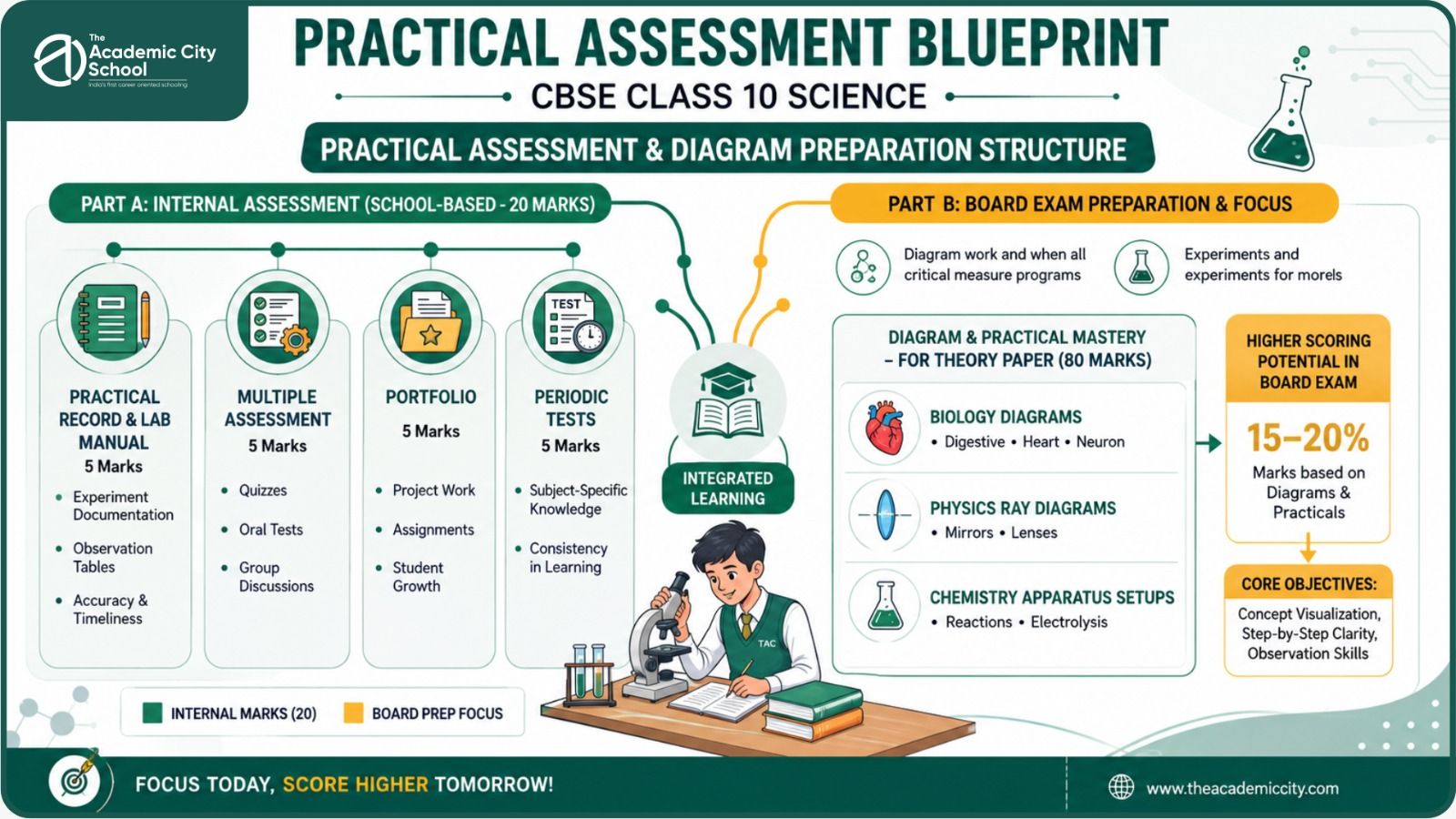 Figure 2: Practical assessment structure
Board Exam Focus Areas
- Labeled Diagrams that appear directly in the theory paper, worth full marks for correct labelling
- Experimental Procedures asked as stepwise, aim to result questions
- Observation Based Questions, where you interpret data rather than recall it
- Competency Based Questions, a growing share of the CBSE paper pattern
- Viva Preparation, tested informally through oral rounds during practicals
- Practical Applications, connecting lab activities to real world situations
Why Diagrams Matter So Much
- Faster Presentation, a clean diagram often replaces three lines of writing
- Better Concept Retention, visuals stay in memory longer than paragraphs
- Higher Answer Quality, examiners notice care and precision immediately
- Improved Stepwise Explanation, labelling forces you to think in sequence
A small tip that our senior faculty repeat every single year, do not wait for the pre-board exams to start practicing diagrams seriously. By then, the syllabus pressure is already high, and diagrams end up being the first thing students rush through. Start early, even in Class 9 if possible, and the habit carries forward naturally.
TAC's 4-Tier Visual Science Learning Framework
At The Academic City School, we do not just hand students a diagram and ask them to copy it fifty times. That approach never really works long term. Instead, every chapter is built around our 4-Tier Visual Science Learning Framework, designed specifically for CBSE board preparation.
Tier 1: Diagram Understanding
Students first understand what each part of a diagram represents and why it is positioned the way it is, before attempting to draw it.
Tier 2: Experiment Demonstration
Every important experiment is demonstrated hands on in TAC laboratories, so the diagram is never disconnected from the real apparatus a student will actually touch.
Tier 3: Board Oriented Questions
- MCQs built around diagram labelling and experiment logic
- Case Studies that mirror the CBSE competency based format
- Practical Based Questions taken from recent sample papers
- Viva Questions rehearsed in small groups
Tier 4: AI Recall System
- Diagram Flashcards for quick daily recall
- Process Maps connecting experiment steps visually
- Observation Tables that mimic what appears in the practical file
- Quick Revision Sheets for the final week before boards
Complete Diagram & Experiment Resource Hub
We built this resource hub because students kept telling us the same thing, notes are scattered across ten different places by the time boards arrive. So, every chapter in this guide follows the same complete structure, and nothing is left out.
- Labeled Diagrams drawn to CBSE marking scheme standard
- Drawing Tips for proportion, shading, and labelling shortcuts
- Practical Activities matched to the NCERT lab manual
- Observation Tables ready to copy into your practical file
- Viva Questions grouped by chapter
- Common Errors that examiners flag most often
- Important Reactions with balanced chemical equations
- PYQs, previous year questions sorted by frequency
- Competency Based Questions in the current CBSE style
- Revision Notes condensed for last minute reading
- Downloadable PDFs for offline practice
Chapter-Wise Important Diagrams Directory
Let us be honest, not every diagram in the NCERT textbook carries equal weight in the board exam. Some come back year after year, others rarely show up at all. Here is the chapter wise breakdown we use with our own students. A quick note before the tables. We are not saying you should skip any diagram entirely, CBSE can technically ask from anywhere in the syllabus. What we are saying is, if your revision time is limited in the last few weeks, these are the diagrams that deserve first priority, based on years of paper analysis and classroom experience.
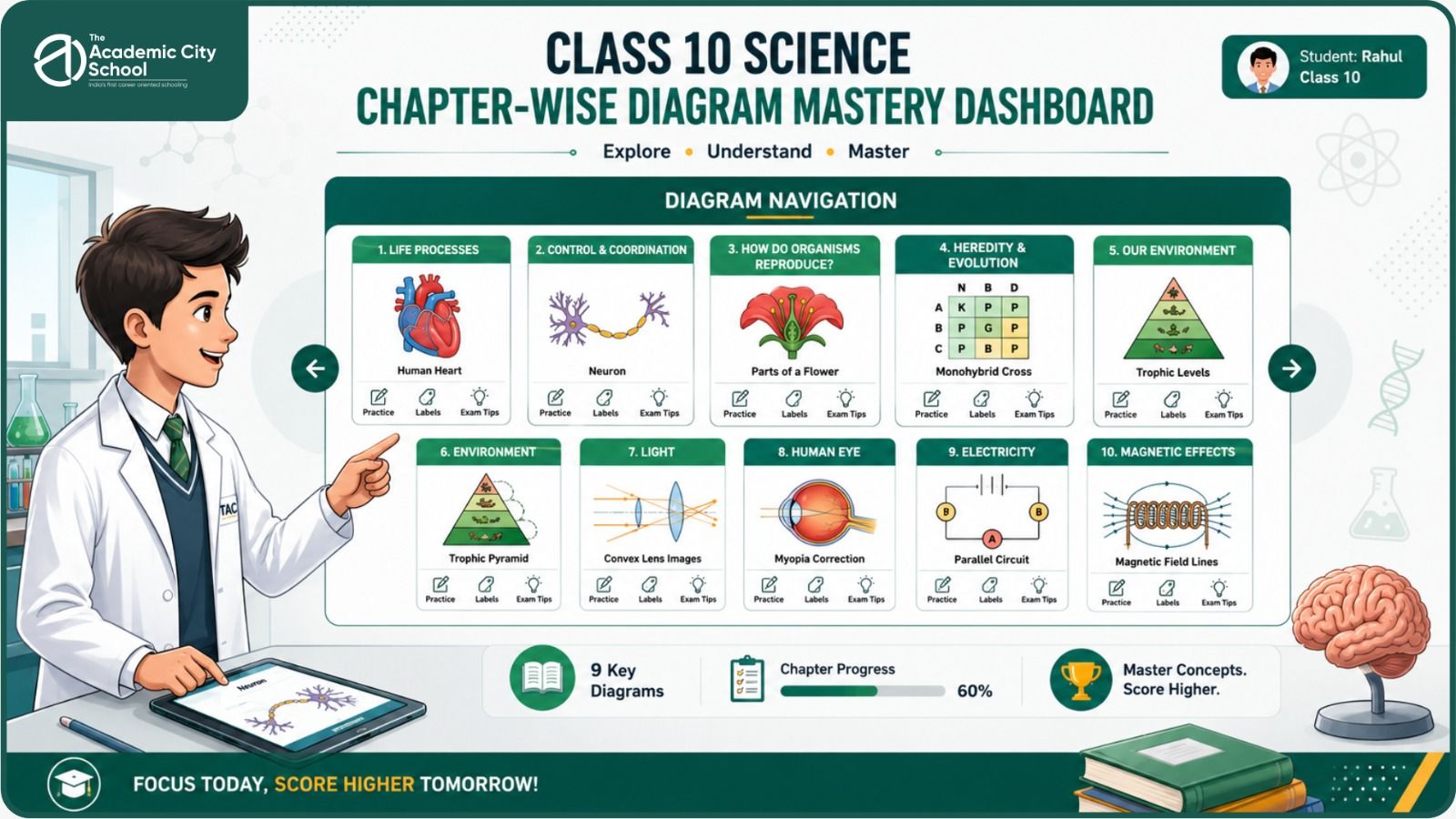 Figure 3: Chapter-wise diagram navigation
Biology
| Chapter | Important Diagrams |
|---|---|
| Life Processes | Human Digestive System, Human Heart |
| Control & Coordination | Neuron, Reflex Arc |
| How Do Organisms Reproduce? | Male & Female Reproductive Systems |
| Heredity & Evolution | Monohybrid Cross, Evolutionary Relationships |
| Our Environment | Food Chain, Food Web |
| Sustainable Management of Natural Resources | Water Harvesting Models |
Physics
| Chapter | Important Diagrams |
|---|---|
| Light | Ray Diagrams for Mirrors & Lenses |
| Human Eye | Human Eye Structure |
| Electricity | Electric Circuit Diagrams |
| Magnetic Effects | Magnetic Field Around a Conductor |
| Sources of Energy | Hydroelectric Plant, Solar Cell |
Chemistry
| Chapter | Important Diagrams |
|---|---|
| Chemical Reactions | Experimental Setups |
| Acids, Bases & Salts | pH Scale & Lab Apparatus |
| Carbon & Its Compounds | Homologous Series & Soap Micelle |
| Metals & Non-Metals | Electrolytic Refining Setup |
Chapter-Wise Important Experiments Directory
Diagrams get all the attention, but the experiments behind them matter just as much, especially for viva and competency questions. Here is what we prioritise across the three subjects.
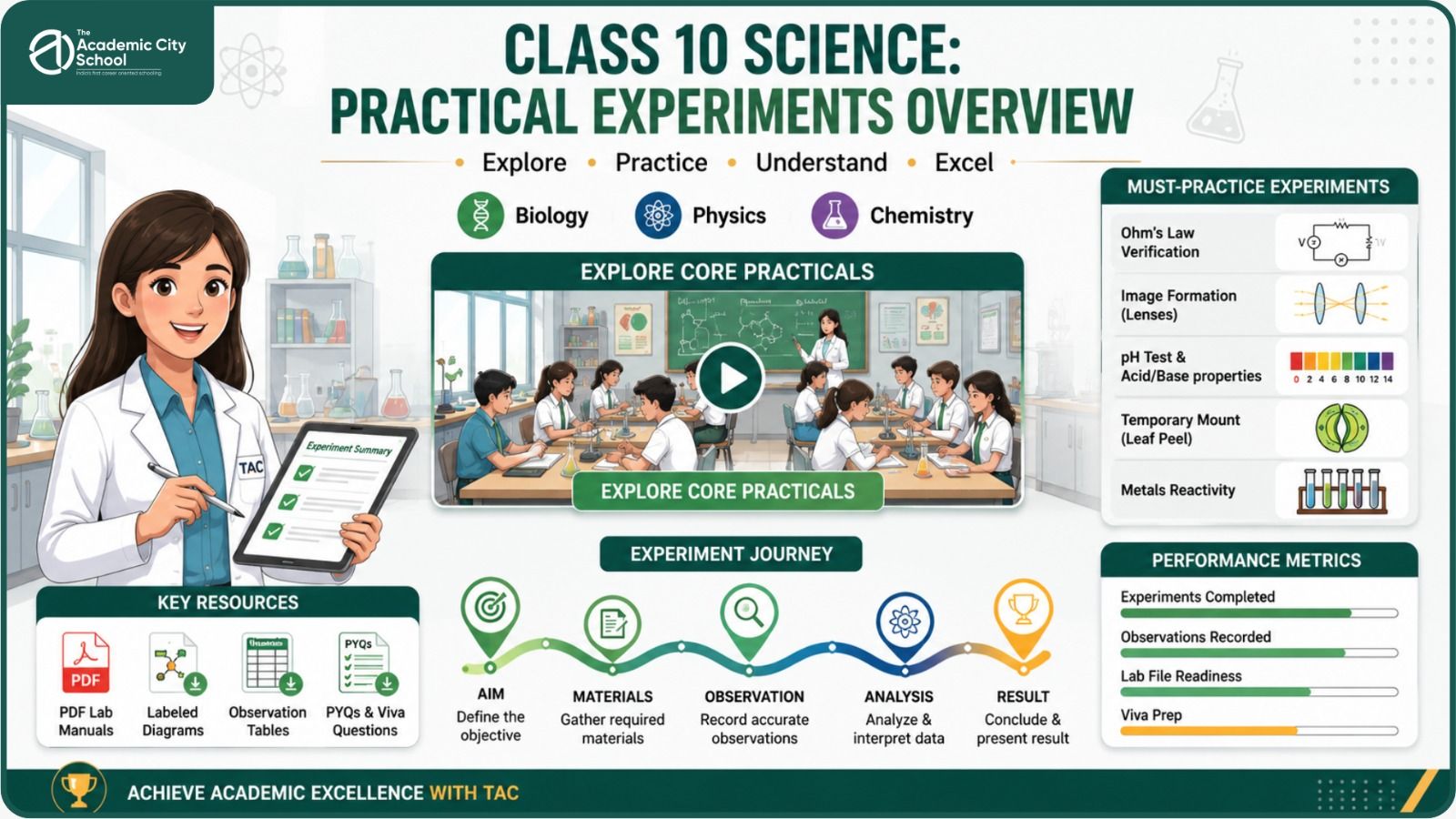 Figure 4: Ray diagrams and practical setup
Chemistry Experiments
- pH Testing of common household substances
- Properties of Acids & Bases
- Chemical Reactions, observing the four to five basic types
- Metal Reactivity comparisons
- Soap Cleansing Action, a favourite viva topic
Physics Experiments
- Verification of Ohm's Law
- Image Formation by Mirrors
- Image Formation by Lenses
- Magnetic Field Observation around a current carrying conductor
- Electric Circuit Activities, series and parallel combinations
Biology Activities
- Temporary Mount of Leaf Peel
- Stomata Observation under a microscope
- Osmosis Demonstration
- Tropic Responses in plants
- Plant Tissue Observation
One thing students often miss with Biology activities is the microscope work. Stomata observation in particular trips people up during viva because they can describe the theory but freeze when asked how the slide was actually prepared. Practice the hands on steps, not just the definitions, and this stops being a problem.
Biology Diagram Mastery Zone
Biology diagrams reward patience more than talent. A student who practices the human heart even ten times slowly will beat someone who rushes through it fifty times. We have seen this play out year after year in our own classrooms.
Must-Practice Diagrams
- Human Digestive System
- Human Heart
- Neuron
- Reflex Arc
- Human Eye
- Reproductive System
- Food Chain
- Stomata
Biology Drawing Strategy
- Correct Proportion, keep organs and parts to realistic relative sizes
- Neat Labels, always drawn with a ruler and pointing precisely to the part
- Pencil Drawing, never ink, since CBSE prefers pencil diagrams in the answer sheet
- Scientific Terminology, use the exact NCERT term, not a shortened version
- Clean Presentation, no overwriting or smudging around the labels
Here is a small trick that works well for the human heart diagram specifically. Draw the outline first in very light pencil strokes, check the proportion against the textbook, and only then go over it with slightly firmer lines before adding labels. Students who skip that first light sketch step usually end up with a lopsided heart, and once the shape is wrong, the labelling looks messy too, even if the words themselves are correct.
Physics Practical & Ray Diagram Mastery
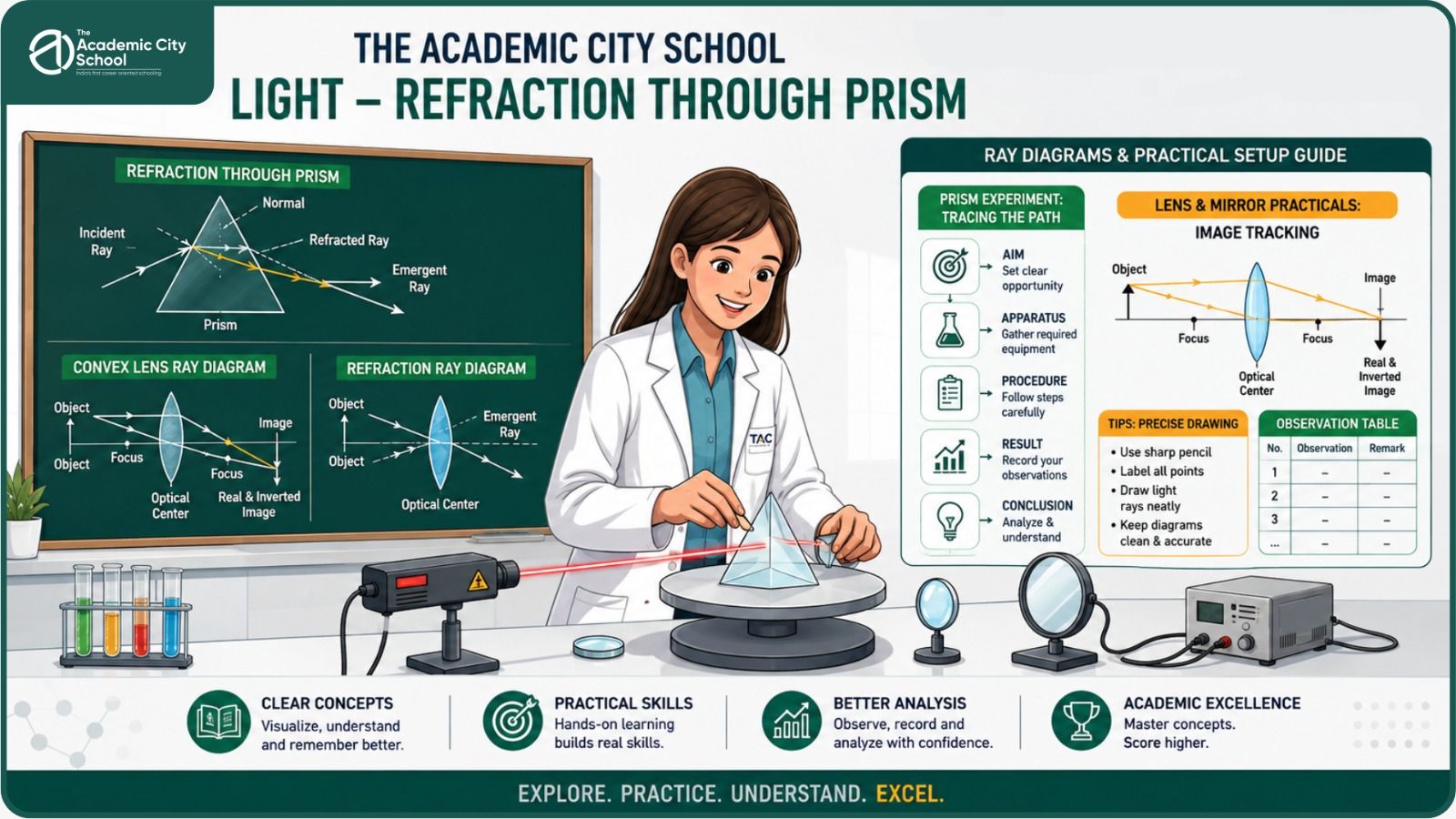 Figure 5: Ray diagrams and practical setup
Physics diagrams are less about artistic skill and more about geometry and rules. Once a student understands the two or three rules behind ray diagrams, drawing them becomes almost mechanical, in a good way.
Must-Practice Topics
- Convex Lens, image formation at various object distances
- Concave Mirror, image formation at various object distances
- Human Eye, structure and defects of vision
- Electric Circuit, series and parallel arrangements
- Magnetic Field, around a straight conductor and a coil
- Solenoid, field pattern and behaviour
- Electric Motor, conceptual representation where applicable
Practical Preparation Framework
We train every student to follow the same sequence for physics experiments, without skipping a step:
- Aim, stated in one clear line
- Apparatus, listed completely
- Procedure, written in correct order
- Observation, recorded honestly, even if a reading looks odd
- Result, matched back to the aim
- Precautions, the part students forget most, and lose marks for
Ray diagrams specifically reward accuracy over speed. Use a sharp pencil, a proper ruler, and take the extra thirty seconds to mark the principal axis, focus, and centre of curvature clearly before drawing the actual rays. A rushed ray diagram with wobbly lines almost always loses marks even when the logic behind it is correct.
Chemistry Experiments & Reaction Observation Guide
Chemistry experiments in Class 10 are fairly compact in number, but examiners love testing them from unexpected angles. Knowing the format cold is what separates a confident answer from a guessed one.
Experiment Format
- Aim
- Materials Required
- Procedure
- Observation
- Chemical Equation, balanced correctly
- Result
- Precautions
Must-Learn Reactions
- Combination Reactions
- Decomposition Reactions
- Displacement Reactions
- Double Displacement Reactions
- Neutralization Reactions
- Redox Reactions
A common slip we see with chemical equations, students remember the reaction perfectly but forget to mention the physical states, solid, liquid, gas or aqueous. CBSE examiners do check for this, so make it a habit to write the state symbols every single time you practice an equation, not just during the exam.
Viva Questions & Practical Exam Preparation
The viva round makes students more nervous than the written practical itself, and honestly, that nervousness is usually the bigger problem, not the actual science. A calm student who knows the basics will always outperform a jittery one who over-prepared but froze.
What The Viva Round Includes
- Frequently Asked Viva Questions from past sessions
- Experiment Based Questions on procedure and logic
- Diagram Identification, naming parts on the spot
- Observation Questions, explaining what a result actually means
- Safety Rules, especially for chemistry handling
- Common Oral Questions asked across most CBSE schools
Practical Confidence Checklist
- Learn Theory behind every experiment, not just the steps
- Revise Procedure until it can be said without pausing
- Practice Diagrams regularly, not just the night before
- Remember Precautions, they are asked more often than expected
- Explain Observations in your own simple words
If there is one piece of advice we give every nervous student before a viva, it is this, slow down before answering. Teachers conducting viva sessions are not trying to trick you, they usually just want to see if you actually understand the experiment. A calm, slightly incomplete answer said with confidence generally scores better than a rushed, jumbled one that technically had all the right words somewhere in it.
Previous Year Practical & Diagram Trends
If you look across enough CBSE Class 10 Science papers, a pattern becomes obvious pretty quickly. Certain diagrams and topics simply repeat, year after year, in slightly different wording.
| Subject | High Frequency Areas |
|---|---|
| Biology | Heart, Neuron, Digestive System |
| Physics | Light, Electricity |
| Chemistry | Chemical Reactions, Acids & Bases |
TAC Insight
- Board examinations consistently emphasise well labelled diagrams
- Experiment based reasoning is tested more than plain memorisation
- Observation driven questions are becoming a bigger part of the paper each year
Looking at trends across recent years, competency based and case study questions have quietly increased their share of the paper. These questions often present a scenario, say an unusual observation from an experiment, and ask students to reason through it rather than recall a textbook line. Practicing straightforward diagrams is no longer enough on its own, students also need to understand why something happens, not just what happens.
Common Practical & Diagram Mistakes That Cost Marks
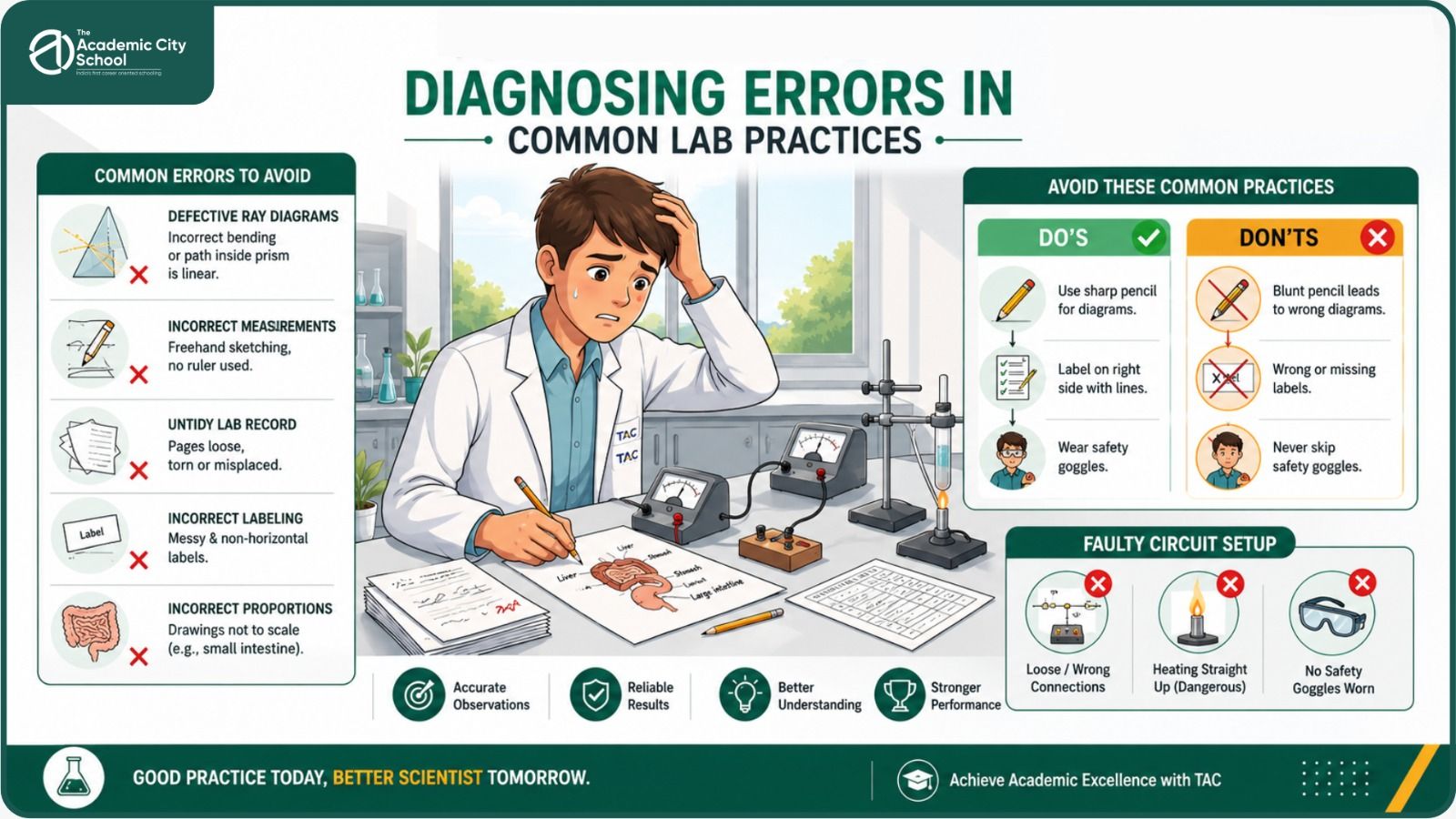 Figure 6: Common practical and diagram errors
We have corrected thousands of practical files over the years, and honestly, the same handful of mistakes show up again and again. The good news is, every single one of these is fixable with a little attention.
- Incorrect Labels, often just spelling errors or vague pointer lines
- Poor Proportion, organs or parts drawn out of realistic scale
- Missing Precautions, skipped entirely in a rush to finish
- Wrong Observations, sometimes copied from a friend instead of recorded honestly
- Incomplete Chemical Equations, left unbalanced or missing states of matter
- Confusing Apparatus, mixing up similar looking lab equipment
- Untidy Presentation, overwriting, smudging, or no ruler used for lines
Faculty Observation
- Students generally lose marks because of incomplete labelling
- Missing experimental steps is more common than actual conceptual errors
- Weak explanation of observations is the single biggest gap we see in practical files
Interestingly, most of these mistakes are not really knowledge gaps at all. They are habit problems. A student who understands the reflex arc perfectly can still lose marks simply because the diagram was rushed at the end of the exam, with labels scribbled in sideways. Building the habit of neat, unhurried diagram work months before the exam solves most of this list on its own.
Smart Revision Strategy for Diagrams & Experiments
Revision for diagrams needs a slightly different approach than revising theory. You cannot just read a diagram, you have to draw it, over and over, until your hand remembers it almost automatically.
Daily Revision Toolkit
- Diagram Practice Notebook, kept separate from regular class notes
- Experiment Summary Sheets, one page per experiment
- Observation Flashcards for quick daily recall
- Viva Notes, written in question and answer format
- PYQ Collection, sorted subject wise
- Practical File Review, done at least once every two weeks
TAC Memory Method
- Observe the process or structure carefully first
- Draw it without looking at the textbook
- Label every part using correct scientific terms
- Explain it out loud, as if teaching a friend
- Revise it again after two days, then after a week
Spaced repetition, which is really just a fancy term for revisiting something after a gap instead of all at once, works particularly well for diagrams. A student who draws the neuron once, then again two days later, then again, a week after that, retains it far longer than someone who draws it ten times in one sitting the night before the exam.
15-Day Practical Revision Blueprint
With only fifteen days left before the practical exam or the board paper, students often panic and try to cover everything at once. That rarely works. A structured day wise plan works far better.
| Days | Focus |
|---|---|
| 1-5 | Biology Diagrams & Activities |
| 6-10 | Physics Diagrams & Experiments |
| 11-13 | Chemistry Experiments |
| 14 | Viva Practice |
| 15 | Full Practical Revision |
Why Students Choose The Academic City School
Plenty of schools teach the Class 10 Science syllabus. What we focus on at The Academic City School is making sure students actually understand what they are drawing and doing in the lab, not just memorising it for one exam and forgetting it right after.
What Makes TAC Different
- Modern Science Laboratories equipped for hands on Biology, Physics and Chemistry practicals
- CBSE Aligned Practical Training, mapped directly to the current board pattern
- Activity Based Learning, so concepts are experienced, not just read
- Experienced Faculty who has guided students through multiple board cycles
- Individual Practical Guidance for students who need extra support with diagrams
- Integrated Board Preparation connecting classroom, lab, and revision seamlessly
Outcomes Students Receive
- Better Practical Performance across all three science subjects
- Improved Diagram Drawing Skills that carry into senior classes
- Higher Viva Confidence, thanks to regular oral practice sessions
- Strong Scientific Concepts built on understanding, not memorisation
- Better Board Exam Scores, reflected consistently in past results
- Effective Practical Revision, guided by a clear day wise plan
None of this happens by accident. It comes from years of watching what actually works in a real classroom, adjusting the approach when something does not click for students, and staying closely aligned with how CBSE evolves its paper pattern every session. That is really the whole philosophy behind how we teach Science at The Academic City School, practical first, memorisation second. At the end of the day, diagrams and experiments are not the scary part of Class 10 Science, they are actually the most predictable part, once you know where to focus. Start early, practice a little every day, and by the time boards arrive, this entire chapter of your preparation will feel more like a formality than a fear. If you take away just one thing from this guide, let it be this. Consistency beats intensity every single time when it comes to diagrams and experiments. A student who spends fifteen quiet minutes a day practicing will walk into the exam hall far calmer than one who tries to cram every diagram into a single frantic night. Good luck, and remember, your pencil and a little patience will take you further than you think.
Frequently Asked Questions
Which diagrams are most important for Class 10 Science board exams?
Based on past trends, the human heart, neuron, reflex arc, human eye, ray diagrams for lenses and mirrors, and electric circuit diagrams show up most consistently. That said, every chapter listed in the directory above deserves at least one round of practice, since CBSE does rotate questions, and a chapter that stayed quiet for two years sometimes returns unexpectedly the following session.
Are practical experiments asked in theory papers?
Yes, quite often. CBSE regularly includes questions on aim, procedure, observation, and precautions directly in the theory paper, not just in the separate practical exam. This is exactly why practical understanding cannot be treated as optional. Students who treat lab work as separate from theory revision usually end up surprised when a two mark question quietly tests an experiment they never revised properly.
How should I label Science diagrams?
Use a ruler for pointer lines, write labels horizontally wherever possible, and always use the exact term given in the NCERT textbook. Avoid overlapping lines, and keep enough spacing so the diagram does not look cramped.
Which Physics practicals are most important?
Verification of Ohm's Law, image formation by convex lenses and concave mirrors, and basic electric circuit activities are asked most frequently. Ray diagrams in particular deserve extra practice since small angle errors are an easy way to lose marks.
How do I prepare for the Science viva?
Review the logic and setup behind each experiment, not just the steps by heart. Practice explaining findings out loud, and get comfortable naming diagram parts fast, since viva questions are often thrown without warning. It also helps to practice with a friend or a parent asking random questions from your practical file, so the actual exam setting feels a little less unfamiliar.
How often should I practice diagrams?
A short daily practice session works far better than one long session before the exam. Even ten to fifteen minutes a day, spent redrawing two or three diagrams from memory, builds lasting recall.
Can I download diagram PDFs?
Yes, The Academic City School provides a downloadable diagram and practical toolkit covering all three subjects, designed to support classroom learning and independent revision.
Are NCERT practical activities sufficient for board exams?
NCERT practical activities form the core syllabus and work great as a base, but backing it up with data tables, oral practice, and old papers gives a much better and exam ready setup.